2026-08-17 · Robert Ellis
How to Spot Flashing Failures on Commercial Flat Roofs
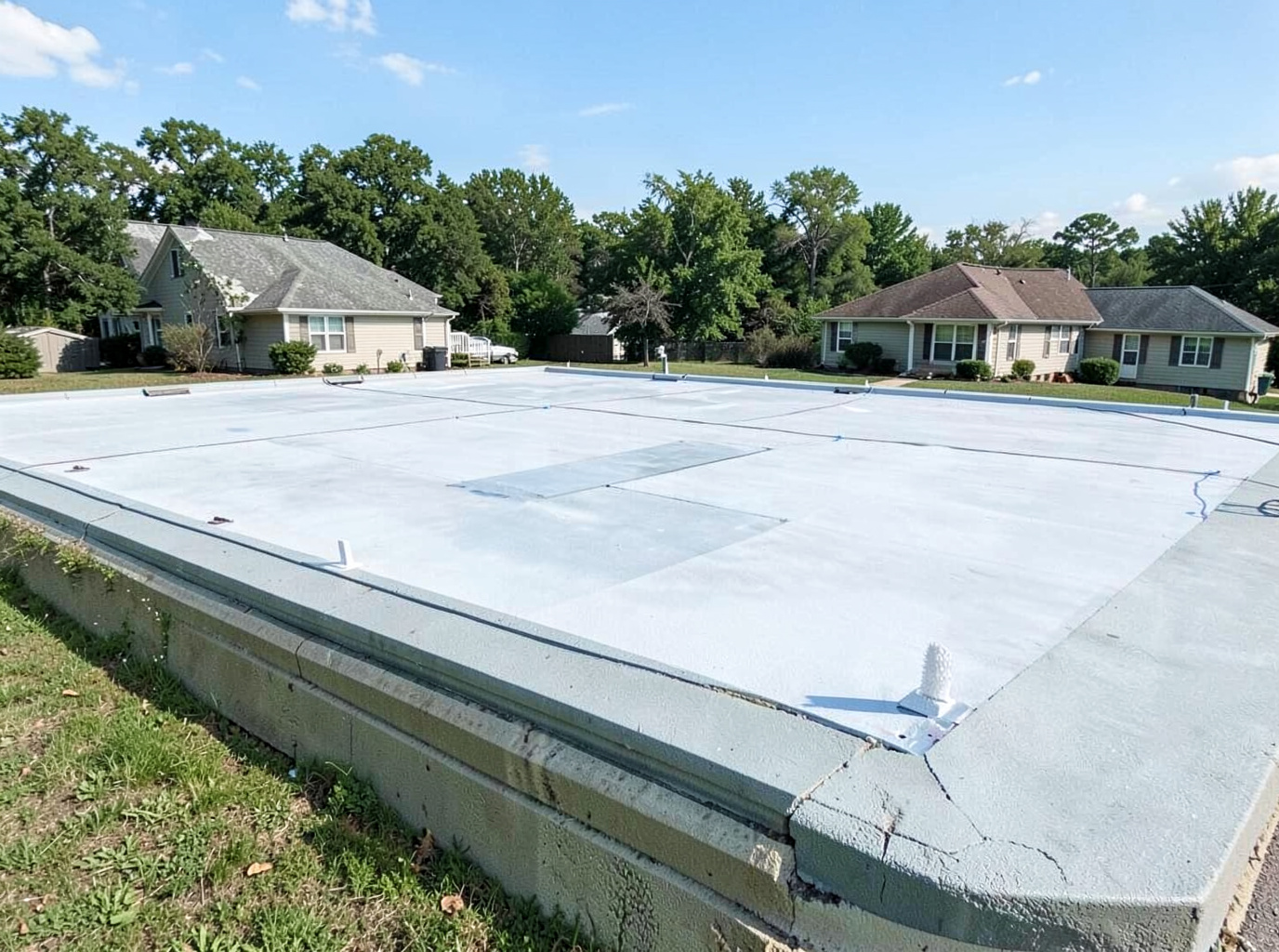
Flashing fails on commercial flat roofs when seams pull apart or rust eats through within 5–8 years. Check the metal strips around curbs, vents, and walls first. Look for rust lines running down the surface, small gaps at the edges, or dark water stains within 3–6 feet of those joints. In Beaumont those signs show up faster because of our hot humid air and frequent thunderstorms.
What are the first signs of flashing failure on a flat roof?
Start at the HVAC curbs and pipe boots. Rust streaks or white chalk marks mean the metal has lost its coating. Lift the edge of the flashing with a flat bar if you can reach it safely. Daylight showing through or soft felt underneath tells you water has already moved in. In Downtown Beaumont and the West End I see this on buildings near Lamar University after just one bad hurricane season. The 15–20 mph winds during storms push water under any lifted edge.
Next check the wall flashing where the roof meets the parapet. Bubbling or peeling coating along the base means moisture is trapped. Count the rows of fasteners. If more than 10 percent are backed out or missing, the whole strip needs attention. Old Town buildings often have this because the original tar and gravel layers were never flashed right for our humidity.
How does Beaumont weather make flashing fail faster?
Our subtropical climate keeps roofs wet for days after a storm. Thunderstorms hit 60–80 times a year and push water under any opening. Hurricane risk adds high winds that peel flashing at the corners first. Jefferson County buildings also face salt air from the coast that speeds rust on steel edges. I have seen a 2-year-old flashing job turn to lace after two direct hits from tropical storms. The constant heat expands metal every day and opens seams that looked tight in cooler months.
What does flashing repair cost on a commercial flat roof?
Expect $650–$1,800 to replace flashing around one curb or vent section. Full perimeter work on a 5,000 sq ft roof runs $3,200–$5,500 depending on access. Those numbers cover new 24-gauge metal, proper sealant, and labor for a two-man crew. Skip the big-box sealant tubes. They crack in our heat within 18 months and leave you paying twice. If the membrane itself is damaged under the flashing, add $1,200–$2,400 for a commercial flat roof repair patch.
When can you check flashing yourself and when should you call a pro?
You can walk the roof on a dry day and note rust or gaps from the ground with binoculars. Take photos of every curb and wall joint. That part is safe and useful. Do not climb parapets or lean over edges. Skip any work on wet surfaces or roofs with standing water. Once you see daylight under the flashing or water inside the building, stop and call. We handle the inspection and fix under one permit so the job meets Jefferson County rules. commercial flat roof repair covers those cases.
If the building is a rental, read the code requirements before you touch anything. What Beaumont Building Codes Require for Flat Roof Replacements lays out the exact steps. For rental properties the owner usually needs a licensed crew anyway.
Stop by 6550 Westwood Blvd or ring us during Mon-Sat 7am-7pm if these signs show up on your roof.