2026-08-17 · Robert Ellis
Recognizing Hail Damage on Flat Roof Surfaces
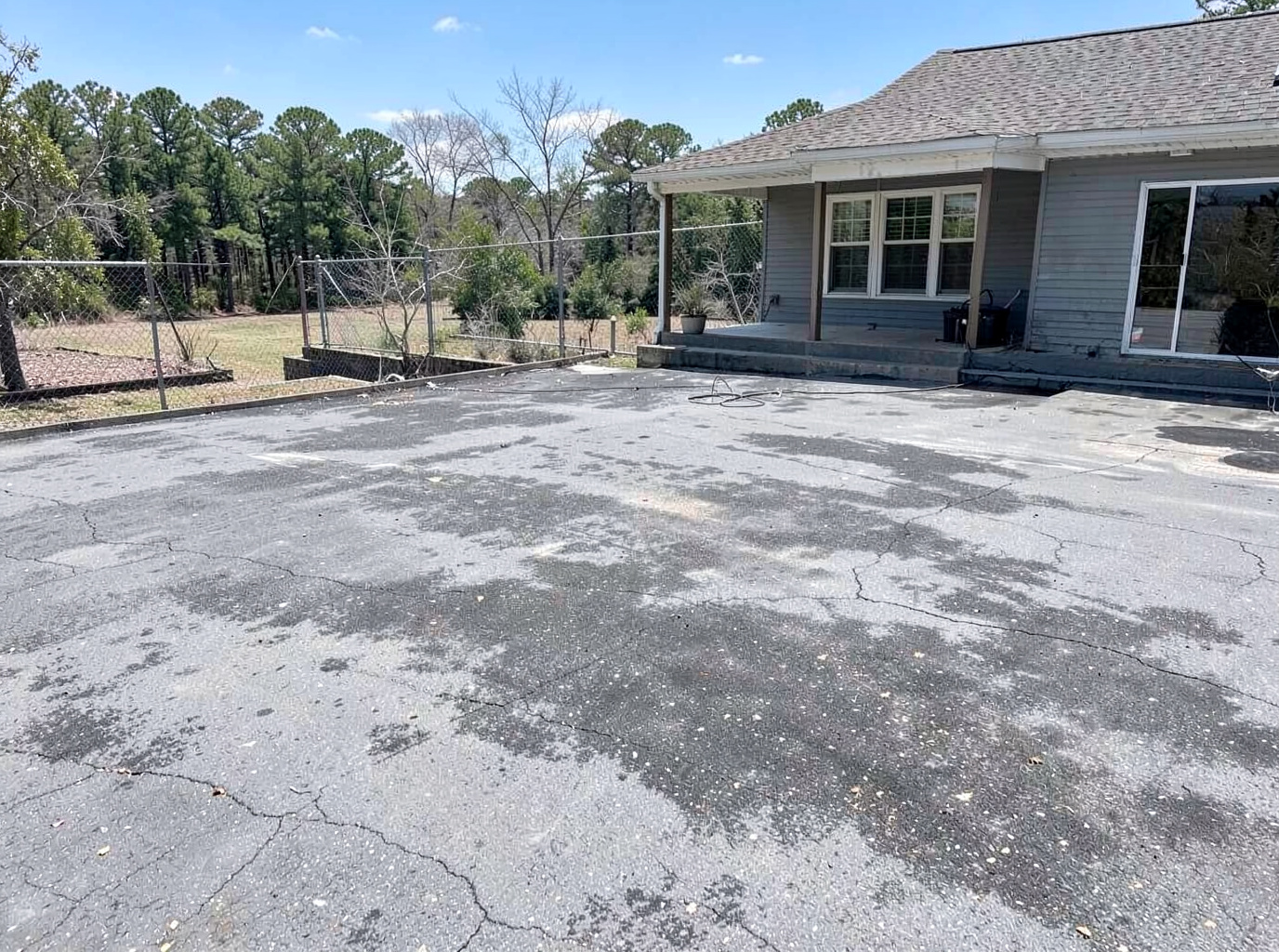
Hail damage on flat roof surfaces shows up as random dents 1 to 3 inches wide, small punctures through the membrane, and loose granules in clusters, not uniform wear. These marks appear after spring storms and stand out against the smooth surface when you walk the roof at dusk.
What does real hail damage look like on a flat roof?
Walk the surface after a storm and look for bruised spots where the membrane has been compressed. You will see circular depressions that do not spring back, often with a small tear at the center. Granule loss shows as lighter circles where the protective coating has been knocked away. In neighborhoods like West End and South Park the damage clusters near the low spots where water already sits. Skip the big-box sealant on these spots because it traps moisture underneath and speeds up rot in our hot humid air.
How does Beaumont weather turn small hail hits into leaks?
Our hot humid subtropical climate brings frequent thunderstorms that drop hail mixed with heavy rain. Once the membrane is dented, water sits in those depressions and works under the layers during the next downpour. Jefferson County sees hurricane risk every few years that adds wind-driven rain into any opening. Houses in Old Town and Calder Highlands often have older built-up roofs that crack faster once the hail has started the break. One small puncture can grow into a 4-foot wet spot inside a single season if left alone.
What do hail repairs actually cost in this area?
A full inspection runs $250 to $400. Spot repairs on 2 to 5 punctures usually land between $600 and $1,200 depending on membrane type. Larger areas with widespread denting push into $1,800 to $3,500 for coating or section replacement. These numbers cover labor and materials at current Beaumont rates and assume no hidden deck damage. Prices climb if the job hits a holiday weekend or requires crane access on downtown buildings.
When can you check it yourself and when do you call?
You can safely walk the roof on a dry day, take photos of the dents, and measure how far water pools after a rain. Note any soft spots by pressing with your heel. Stop at the edge if the roof feels spongy or you see daylight through a tear. Anything involving ladders over two stories, electrical lines, or cutting into the membrane crosses into code territory and needs a pro. We handle the flat roof inspection and hurricane and storm flat roof repair work when the damage spreads.
Compare the dents you found with early signs of membrane shrinkage on similar roofs to rule out other causes. If the pattern matches hail and water is already inside, reach the shop at 6550 Westwood Blvd before the next front moves through.